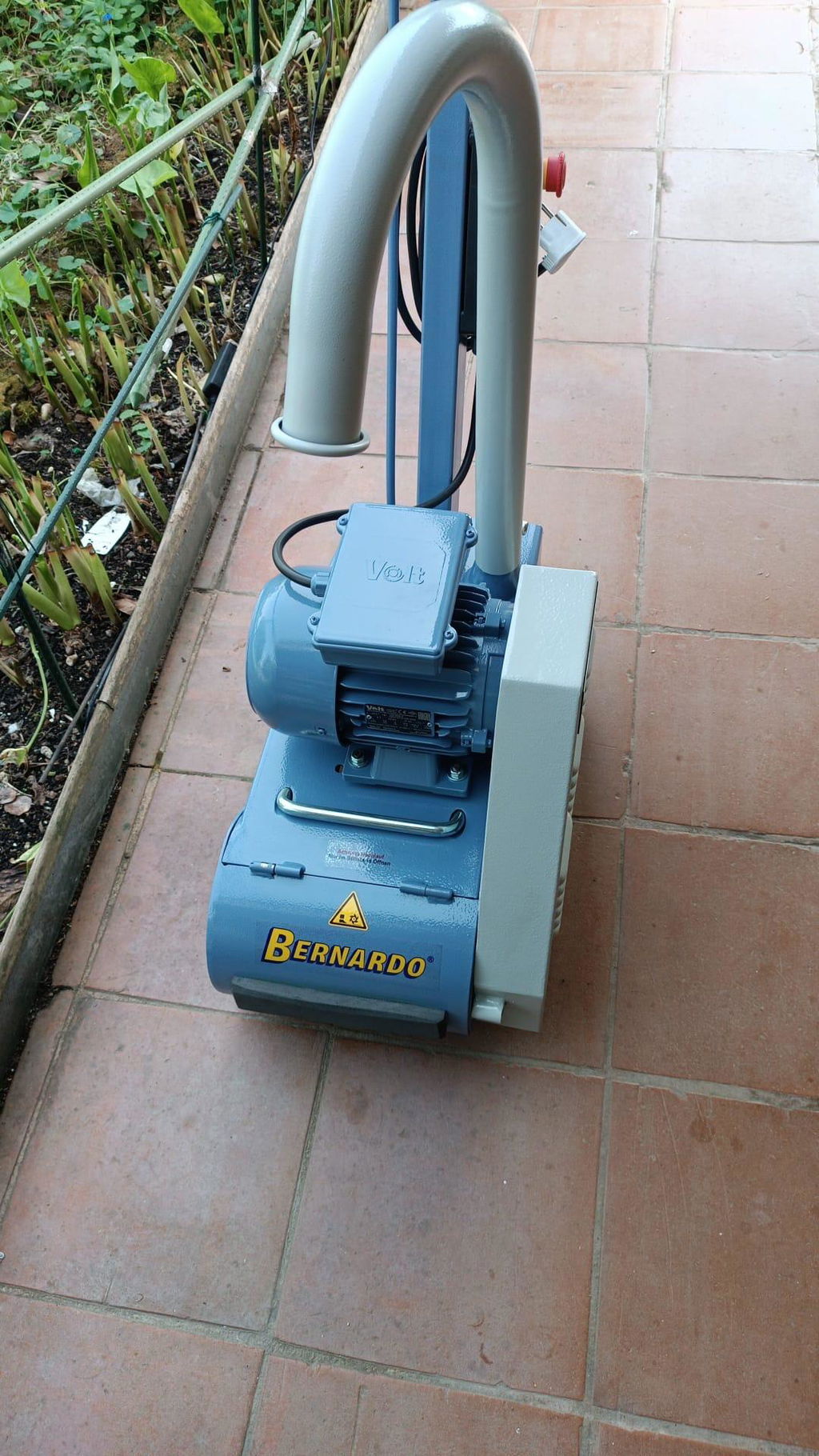


The best drill presses of 2026 are the Güde GTB 16/500 VARIO for hobbyists (€360, laser and digital display), the Bernardo BM 25 T for workshops (€669, 25mm drilling capacity), and the Bernardo GB 30 TV for industrial use (€3,904, automatic feeds and coolant pump). This guide compares 10 models from €144 to €3,904 to help you choose the right drill for your needs.
A drill press is an indispensable machine for precise and repeatable drilling on metal, wood, and plastic. Unlike a hand drill, its fixed structure ensures perfect perpendicularity, controlled depth, and the ability to work with large pieces. In the Krollit catalog, you'll find models for every application: from advanced DIY to professional mechanical workshops.
Comparison Table: The 10 Best Drill Presses
Model
Price
Max Drilling
Power
Speed
Stroke
Weight
Ideal for
| Güde GTB 14/509 | €144.57 | 16 mm | 500 W | 9 (500–2500 rpm) | 50 mm | 15 kg | Entry-level hobbyist |
| Güde GTB 16/500 VARIO | €360 | 16 mm | 500 W | Continuous (290–2500 rpm) | 90 mm | 23 kg | Hobbyist best buy |
| Bernardo TB 16 T | €434.32 | 16 mm | 0.55 kW | 12 (300–2550 rpm) | 65 mm | 36 kg | Semi-professional |
| Bernardo BM 20 T | €622.20 | 20 mm | 0.55 kW | 16 (220–2840 rpm) | 80 mm | 45 kg | Light workshop |
| Bernardo BM 25 T | €669.78 | 25 mm | 0.75 kW | 16 (220–2840 rpm) | 80 mm | 57 kg | Standard workshop |
| Bernardo SBM 20 Vario |
|
20 mm | 0.90 kW | Continuous (400–1950 rpm) | 80 mm | 68 kg | Professional 230V |
| Bernardo B 430 Vario | €969.90 | 25 mm | 0.75 kW | Continuous (280–2600 rpm) | 80 mm | 100 kg | Workshop 400V |
| Bernardo DMT 20 |
|
20 mm + M16 | 1.1 kW | 5 (320–1820 rpm) | 135 mm | 192 kg | Drilling + tapping |
| Bernardo SB 30 Profi |
|
32 mm | 0.55/0.85 kW | Continuous (105–1725 rpm) | 120 mm | 245 kg | Heavy duty |
| Bernardo GB 30 TV | €3,904 | 32 mm + M20 | 0.85/1.1 kW | 12 (125–3030 rpm) | 140 mm | 235 kg | Industrial |
Detailed Analysis of the 10 Models
1. Güde GTB 14/509 – The most affordable (€144.57)
The Güde GTB 14/509 is the entry-level drill press for DIY beginners or those with occasional needs. With 500W of power and 9 selectable speeds via pulleys (500–2500 rpm), it handles drilling up to 16mm on wood, plastic, and light metals.
Key specifications: 170×170mm table inclinable ±45° and rotatable 360°, Ø46mm column, 50mm spindle stroke, 15kg weight. Includes B16 geared chuck (1.5–16mm) and chip guard.
Pros: Unbeatable price, compact size (610mm height), low noise (75 dB).
Cons: Limited spindle stroke (50mm), small table, no digital display.
Recommended for: Occasional hobbyists, small household jobs, limited budget.
2. Güde GTB 16/500 VARIO – Hobbyist Best Buy (€360)
The Güde GTB 16/500 VARIO offers the best value for money in the entry-level category. Continuous speed adjustment (290–2500 rpm) eliminates the need for belt changes, while the positioning laser and integrated LED light ensure precision even for complex drilling tasks.
Key specifications: digital speed display, spindle run-out <0.02mm, 245×245mm table, 90mm stroke, Ø60mm column, 23kg weight. Chip guard with safety microswitch.
Pros: Variable speed without interruptions, laser and LED included, spindle stroke almost double that of the GTB 14/509.
Cons: Still hobbyist-oriented (light structure), drilling capacity limited to 16mm.
Recommended for: Advanced hobbyists, small workshops, those seeking technology at an affordable price.
3. Bernardo TB 16 T – First Bernardo (€434.32)
The Bernardo TB 16 T marks the transition to professional build quality. High-quality ball bearings, cast iron pulleys, and an IP54 aluminum motor ensure superior durability and reliability compared to Güde models. The 12 speeds (300–2550 rpm) offer greater flexibility in choosing cutting parameters.
Key specifications: MT2 Morse taper spindle, 245×245mm table with 16mm T-slots, Ø58mm column, base with T-slots for oversized pieces, 36kg weight. Includes 1–16mm self-tightening chuck.
Pros: Bernardo construction, IP54 motor, reinforced base for large pieces.
Cons: No digital display or LED, 65mm spindle stroke.
Recommended for: Craftsmen seeking robustness without frills, first professional purchases.
4. Bernardo BM 20 T – Light Workshop (€622.20)
The Bernardo BM 20 T introduces a digital display for spindle stroke and integrated LED light. Drilling capacity increases to 20mm with 16 speeds (220–2840 rpm). Gray cast iron pulleys and premium bearings ensure high concentricity and quiet operation.
Key specifications: MT2 taper, 285×285mm table inclinable ±45°, Ø72mm column, 80mm stroke, 45kg weight. Includes 1–16mm/B18 self-tightening chuck.
Pros: Digital display, LED, 20mm capacity, more robust structure.
Cons: Unchanged motor power (0.55kW), requires space.
Recommended for: Light workshops, maintenance, craftsmen with regular operations.
5. Bernardo BM 25 T – Standard Workshop (€669.78)
The Bernardo BM 25 T increases capacity to 25mm and power to 0.75kW, making it suitable for demanding drilling on steel. The 305×305mm table with diagonal T-slots offers versatility in workpiece positioning. Digital display and LED complete the features.
Key specifications: 16 speeds (220–2840 rpm), MT2 taper, Ø72mm column, 80mm stroke, 57kg weight. Cast iron base with polished T-slots.
Pros: 25mm drilling, increased motor power, large table with diagonal T-slots.
Cons: Larger footprint, no vario function.
Recommended for: Standard mechanical workshops, light carpentry, steel processing.
6. Bernardo SBM 20 Vario – Professional 230V (€774.09 instead of €860.10)
The Bernardo SBM 20 Vario combines the convenience of 230V single-phase power with professional performance. Continuous variable speed (400–1950 rpm) via frequency converter, digital display for speed and stroke, cross-line centering laser. The 0.90kW motor handles demanding drilling tasks without torque drops.
Key specifications: 305×305mm table, Ø72mm column, 80mm stroke, 68kg weight, total height 1560mm. Column structure (not benchtop).
Pros: Professional Vario at 230V, cross laser, active discount (-10%).
Cons: Narrower speed range (400–1950 rpm), requires vertical space.
Recommended for: Professionals without a three-phase line, workshops in residential areas.
7. Bernardo B 430 Vario – Workshop 400V (€969.90)
![]()
The Bernardo B 430 Vario is designed for workshops with three-phase power. The 100kg cast iron and polished steel structure ensures absolute stability. 345×345mm table rotates 360° with cooling grooves. Variable speed 280–2600 rpm with Morse taper MT3 chuck for large diameter drills.
Key specifications: drilling capacity 25mm, stroke 80mm, column Ø80mm, height 1710mm. 3–16mm/B16 keyless chuck included.
Pros: Exceptional stability, 360° rotating table, MT3 for heavy drills.
Cons: Requires 400V, heavy weight (100kg), no digital display.
Recommended for: Mechanical workshops with three-phase power, repetitive heavy-duty machining.
8. Bernardo DMT 20 – Drilling + Tapping (€1,855.62 instead of €2,061.80)
![]()
The Bernardo DMT 20 is the only model in the selection with integrated automatic tapping function (up to M16). The automatic spindle reversal allows threads to be created without the risk of tap breakage. 135mm spindle stroke (the longest in its category), concentricity ≤0.02mm, 192kg structure.
Key specifications: 5 speeds (320–1820 rpm), 1.1kW motor, 252×252mm table, column Ø85mm. Digital speed display and LED included.
Pros: Automatic M16 tapping, 135mm stroke, precision ≤0.02mm, 10% discount.
Cons: Only 5 speeds, requires 400V, significant weight (192kg).
Recommended for: Workshops producing threaded parts, industrial maintenance.
9. Bernardo SB 30 Profi – Heavy Duty (€2,986.56 instead of €3,318.40)
![]()
The Bernardo SB 30 Profi is built for continuous heavy-duty work. 32mm drilling capacity, 245kg grey cast iron structure, 2-stage motor for high torque even at low speeds (105–1725 rpm). Right/left rotation allows manual tapping operations.
Key specifications: continuously variable speed, MT3 chuck, 400×320mm table, column Ø100mm, stroke 120mm. Digital display and LED included.
Pros: 32mm drilling, massive structure, speeds down to 105 rpm for hard materials.
Cons: High price, large footprint, requires a solid foundation.
Recommended for: Heavy fabrication, marine/agricultural workshops, cast iron machining.
10. Bernardo GB 30 TV – Industrial Top-of-the-Range (€3,904)
![]()
The Bernardo GB 30 TV represents the pinnacle of the range with hardened and ground gear transmission. Three automatic spindle feeds (0.10/0.20/0.30 mm/rev), tapping up to M20, integrated coolant pump, automatic tool release. Concentricity ≤0.02mm for maximum precision drilling.
Key specifications: 12 speeds (125–3030 rpm), 0.85/1.1kW 2-stage motor, 32mm drilling, 140mm stroke, column Ø110mm, weight 235kg.
Pros: Gears (not belts), automatic feeds, coolant pump, M20 tapping.
Cons: Significant price, requires 400V and dedicated space.
Recommended for: Series production, precision mechanical workshops, industry.
How to Choose the Right Pillar Drill
1. Drilling capacity
Capacity indicates the maximum drillable diameter in steel. For hobby use, 16mm is sufficient. Standard mechanical workshops require 20–25mm. For heavy fabrication or industrial use, 30–32mm is needed.
2. Motor power
500W motors handle light drilling and soft materials. For steel, at least 0.55–0.75kW is needed. Industrial applications require 1kW or more with S1 mode (continuous use).
3. Speed: fixed or variable?
Pulley models (fixed speeds) cost less but require changing belts for each material. Vario models allow continuous adjustment without stopping the machine: more practical for those working with different materials.
4. Spindle stroke
The stroke determines the maximum drilling depth in a single pass. 50–65mm is enough for most jobs. For deep drilling, 80–140mm is needed.
5. Power supply: 230V or 400V?
230V models work with a standard household outlet. 400V (three-phase) models offer greater torque and are standard in professional workshops. Check for three-phase line availability before purchasing.
6. Weight and stability
Light machines (<30kg) are portable but vibrate more. Heavy machines (100–250kg) ensure absolute stability but require fixed installation and an adequate floor.
Which Pillar Drill to Choose for Your Budget?
Budget up to €400 – Hobbyist
Recommended choice: Güde GTB 16/500 VARIO at €360
Variable speed, laser, LED, and digital display at an affordable price. Perfect for garages and small workshops.
Budget €400–€700 – Semi-professional
Recommended choice: Bernardo BM 25 T at €669.78
25mm capacity, Bernardo construction, display, and LED. The best compromise between performance and price for those who work regularly.
Budget €700–€1,000 – Professional
Recommended choice: Bernardo SBM 20 Vario at €774.09 (230V) or B 430 Vario at €969.90 (400V)
Professional variable speed, robust construction. SBM 20 for those with only 230V, B 430 for workshops with three-phase.
Budget €1,500–€3,000 – Equipped Workshop
Recommended choice: Bernardo DMT 20 at €1,855.62 (if tapping is needed) or SB 30 Profi at €2,986.56 (if 32mm drilling is needed)
Production machines with advanced functions. Both on offer with 10% discounts.
Budget over €3,500 – Industrial
Recommended choice: Bernardo GB 30 TV at €3,904
The top of the range with gear transmission, automatic feeds, and coolant pump. For those who accept no compromises.
Frequently Asked Questions about Pillar Drills
What is the difference between a bench drill and a pillar drill?
A bench drill rests on a workbench and is more compact (height 60–100cm). A pillar drill stands on its own base on the floor and is taller (150–180cm). The main difference is the spindle-to-base distance: greater in pillar models, allowing work on taller pieces. For the same capacity, pillar models generally offer greater stability.
How much power is needed to drill steel?
For drilling up to 10mm in mild steel, 500W is sufficient. For diameters 10–20mm, 550–750W is needed. For drilling over 20mm or in hard steel (stainless, alloy), at least 1kW is required. The operating mode is important: S1 indicates continuous use, S2 or S6 indicate intermittent cycles.
Fixed or variable speeds: which to choose?
Fixed speeds (with pulleys) cost less and are reliable, but require stopping the machine and moving the belt to change speed. Variable speeds (Vario) allow on-the-fly adjustment via a potentiometer: ideal for those working with different materials or wanting to optimize cutting parameters without interruptions.
What does Morse taper MT2 or MT3 mean?
The Morse taper is the standard attachment between the chuck and the spindle. MT2 (Morse Taper 2) is common on small and medium machines, MT3 on larger machines. An MT3 chuck accepts drill bits with a larger tapered shank and better resists stress. Reducing sleeves can be used to mount MT2 tools on MT3 machines.
Is the tapping function necessary?
Integrated tapping (present on DMT 20 and GB 30 TV) is useful if you regularly produce threaded holes. Automatic spindle reversal extracts the tap without risk of breakage. If you tap occasionally, you can use a manual tap on any drill with right/left rotation.
Can I use a 400V pillar drill with a converter?
Technically yes, but quality single-phase to three-phase converters cost €300–800 and can limit motor performance. If you don't have a three-phase line, it's more convenient to choose a 230V model like the Bernardo SBM 20 Vario or the BM 25 T.
Conclusion
A pillar drill is an investment that lasts for decades if chosen correctly. For hobbyists and small workshops, the Güde GTB 16/500 VARIO offers modern technology at an affordable price. For professional workshops, the Bernardo BM 25 T or SBM 20 Vario guarantee robustness and precision. For industrial applications, the Bernardo GB 30 TV with gears and automatic feeds represents the definitive choice.
The Bernardo B 430 Vario is designed for workshops with three-phase power. The 100kg cast iron and polished steel structure ensures absolute stability. 345×345mm table rotates 360° with cooling grooves. Variable speed 280–2600 rpm with Morse taper MT3 chuck for large diameter drills.
Key specifications: drilling capacity 25mm, stroke 80mm, column Ø80mm, height 1710mm. 3–16mm/B16 keyless chuck included.
Pros: Exceptional stability, 360° rotating table, MT3 for heavy drills.
Cons: Requires 400V, heavy weight (100kg), no digital display.
Recommended for: Mechanical workshops with three-phase power, repetitive heavy-duty machining.
The Bernardo DMT 20 is the only model in the selection with integrated automatic tapping function (up to M16). The automatic spindle reversal allows threads to be created without the risk of tap breakage. 135mm spindle stroke (the longest in its category), concentricity ≤0.02mm, 192kg structure.
Key specifications: 5 speeds (320–1820 rpm), 1.1kW motor, 252×252mm table, column Ø85mm. Digital speed display and LED included.
Pros: Automatic M16 tapping, 135mm stroke, precision ≤0.02mm, 10% discount.
Cons: Only 5 speeds, requires 400V, significant weight (192kg).
Recommended for: Workshops producing threaded parts, industrial maintenance.
The Bernardo SB 30 Profi is built for continuous heavy-duty work. 32mm drilling capacity, 245kg grey cast iron structure, 2-stage motor for high torque even at low speeds (105–1725 rpm). Right/left rotation allows manual tapping operations.
Key specifications: continuously variable speed, MT3 chuck, 400×320mm table, column Ø100mm, stroke 120mm. Digital display and LED included.
Pros: 32mm drilling, massive structure, speeds down to 105 rpm for hard materials.
Cons: High price, large footprint, requires a solid foundation.
Recommended for: Heavy fabrication, marine/agricultural workshops, cast iron machining.
The Bernardo GB 30 TV represents the pinnacle of the range with hardened and ground gear transmission. Three automatic spindle feeds (0.10/0.20/0.30 mm/rev), tapping up to M20, integrated coolant pump, automatic tool release. Concentricity ≤0.02mm for maximum precision drilling.
Key specifications: 12 speeds (125–3030 rpm), 0.85/1.1kW 2-stage motor, 32mm drilling, 140mm stroke, column Ø110mm, weight 235kg.
Pros: Gears (not belts), automatic feeds, coolant pump, M20 tapping.
Cons: Significant price, requires 400V and dedicated space.
Recommended for: Series production, precision mechanical workshops, industry.
Capacity indicates the maximum drillable diameter in steel. For hobby use, 16mm is sufficient. Standard mechanical workshops require 20–25mm. For heavy fabrication or industrial use, 30–32mm is needed.
500W motors handle light drilling and soft materials. For steel, at least 0.55–0.75kW is needed. Industrial applications require 1kW or more with S1 mode (continuous use).
Pulley models (fixed speeds) cost less but require changing belts for each material. Vario models allow continuous adjustment without stopping the machine: more practical for those working with different materials.
The stroke determines the maximum drilling depth in a single pass. 50–65mm is enough for most jobs. For deep drilling, 80–140mm is needed.
230V models work with a standard household outlet. 400V (three-phase) models offer greater torque and are standard in professional workshops. Check for three-phase line availability before purchasing.
Light machines (<30kg) are portable but vibrate more. Heavy machines (100–250kg) ensure absolute stability but require fixed installation and an adequate floor.
Recommended choice: Güde GTB 16/500 VARIO at €360
Variable speed, laser, LED, and digital display at an affordable price. Perfect for garages and small workshops.
Recommended choice: Bernardo BM 25 T at €669.78
25mm capacity, Bernardo construction, display, and LED. The best compromise between performance and price for those who work regularly.
Recommended choice: Bernardo SBM 20 Vario at €774.09 (230V) or B 430 Vario at €969.90 (400V)
Professional variable speed, robust construction. SBM 20 for those with only 230V, B 430 for workshops with three-phase.
Recommended choice: Bernardo DMT 20 at €1,855.62 (if tapping is needed) or SB 30 Profi at €2,986.56 (if 32mm drilling is needed)
Production machines with advanced functions. Both on offer with 10% discounts.
Recommended choice: Bernardo GB 30 TV at €3,904
The top of the range with gear transmission, automatic feeds, and coolant pump. For those who accept no compromises.
A bench drill rests on a workbench and is more compact (height 60–100cm). A pillar drill stands on its own base on the floor and is taller (150–180cm). The main difference is the spindle-to-base distance: greater in pillar models, allowing work on taller pieces. For the same capacity, pillar models generally offer greater stability.
For drilling up to 10mm in mild steel, 500W is sufficient. For diameters 10–20mm, 550–750W is needed. For drilling over 20mm or in hard steel (stainless, alloy), at least 1kW is required. The operating mode is important: S1 indicates continuous use, S2 or S6 indicate intermittent cycles.
Fixed speeds (with pulleys) cost less and are reliable, but require stopping the machine and moving the belt to change speed. Variable speeds (Vario) allow on-the-fly adjustment via a potentiometer: ideal for those working with different materials or wanting to optimize cutting parameters without interruptions.
The Morse taper is the standard attachment between the chuck and the spindle. MT2 (Morse Taper 2) is common on small and medium machines, MT3 on larger machines. An MT3 chuck accepts drill bits with a larger tapered shank and better resists stress. Reducing sleeves can be used to mount MT2 tools on MT3 machines.
Integrated tapping (present on DMT 20 and GB 30 TV) is useful if you regularly produce threaded holes. Automatic spindle reversal extracts the tap without risk of breakage. If you tap occasionally, you can use a manual tap on any drill with right/left rotation.
Technically yes, but quality single-phase to three-phase converters cost €300–800 and can limit motor performance. If you don't have a three-phase line, it's more convenient to choose a 230V model like the Bernardo SBM 20 Vario or the BM 25 T.
A pillar drill is an investment that lasts for decades if chosen correctly. For hobbyists and small workshops, the Güde GTB 16/500 VARIO offers modern technology at an affordable price. For professional workshops, the Bernardo BM 25 T or SBM 20 Vario guarantee robustness and precision. For industrial applications, the Bernardo GB 30 TV with gears and automatic feeds represents the definitive choice.