
How to build a DIY workbench
|
|
Time to read 5 min

|
|
Time to read 5 min
A DIY workbench is an accessible project that transforms any garage or workshop into a functional and organized space. With approximately €240 worth of materials and 3 hours of work, you can build a robust structure with a load capacity of over 200 kg, customizable to your needs.
This guide takes you step-by-step from material preparation to final assembly. It doesn't matter if you are a beginner or an experienced craftsman: by following these instructions, you will get a solid and durable workbench.
Prefer a ready-made solution? Consult our selection of professional wooden workbenches with capacities up to 400 kg, certified beech tops, and warranty included.
Table of contents
All these tools are available in the woodworking machinery section of Krollit, with technical assistance and shipping throughout Italy.
To build the workbench, you will need:
Material
Quantity
Dimensions
| Wooden boards | 22 | 50 × 100 × 2400 mm |
| Uprights | 1 | 100 × 100 × 2400 mm |
| Plywood panels | 2 | 1220 × 2440 mm (19 mm thick) |
| T25 screws | 2.5-3.5 kg | 90 mm |
| Long screws | 16 | 150 mm |
| Swivel casters | 4 | Ø 100 mm |
Start by cutting the wooden boards to the dimensions indicated above. Use a miter saw for precise and safe cuts.
Take one of the two plywood panels and make 10 cm x 10 cm notches at the corners. This allows the panel to fit the 100x100 mm uprights. The second panel remains whole for the lower shelf.
Take six 96.5 cm pieces and two 226 cm pieces. Arrange them as shown in the image, drill pilot holes to prevent splitting, add glue, and insert screws. Immediately wipe away excess glue with a damp cloth.
Add two 104 cm pieces and two 226 cm pieces to the ends of the frame. Apply glue to all contact areas, pre-drill, and screw.
Repeat to create two identical frames.
Add the 122x244 cm plywood panel with indented corners to the frame:
Turn the workbench over and add the second frame. Apply glue to the contact areas, place the 100x100 uprights in the grooves and use straps to hold everything in place. Pre-drill and screw.
Secure the top with the second 122x244 cm plywood sheet. Do not use glue on the top: you might need to replace it in the future due to wear. Only use screws.
Flip the workbench over to install the wheels. Place a wheel on each leg, mark the points, pre-drill, and screw.
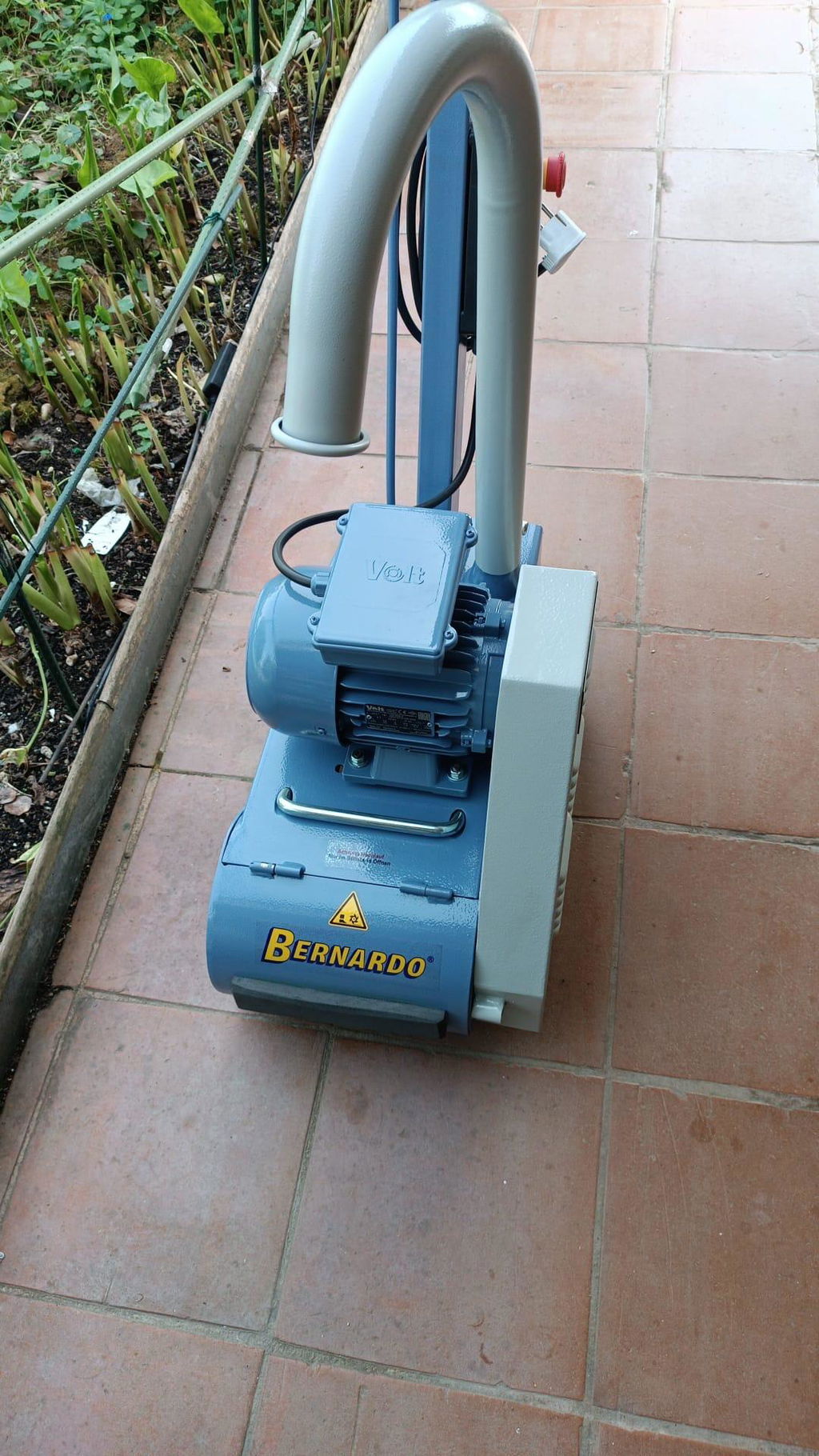
Sand the entire surface of the workbench. For this step, we recommend an orbital or belt sander to speed up the work. Start with 80-grit sandpaper to remove imperfections, then switch to 220-grit for a smooth finish ready for paint or stain.
Feature
DIY Workbench
Güde GW Workbench
Bernardo WB Workbench
| Cost | ~€240 | From €168 | From €415 |
| Time | 3 hours | Ready to use | Ready to use |
| Load Capacity | ~200 kg | 300-400 kg | 200+ kg |
| Top | 19 mm Plywood | Rubberwood / Beech 38 mm | Solid Beech |
| Drawers | No (to be added) | Yes, with lock | No (integrated vices) |
| Warranty | None | 12-24 months | 24 months |
| Ideal for | Hobbyists, custom projects | Workshop, garage | Carpentry |
You have completed your DIY workbench: a solid and functional surface ready for your projects. The wheels allow easy movement, and the sanding ensures a professional finish. The satisfaction of having built it with your own hands is priceless.
If DIY is not for you or you are looking for a more robust solution for professional use, Bernardo carpenter's workbenches offer integrated vises, solid beech tops, and load capacities up to 400 kg. Complete your workstation with workbench accessories: vises, pegboards, and modular supports.
For a sturdy and durable workbench, use hardwoods like beech, ash, or oak. Professional carpenter's workbenches use steamed beech, ideal for long-term stability. Pine and softwoods are only suitable for light or temporary projects.
A good workbench should be stable, robust, and have a resistant surface. It should have enough space for tools and an ergonomic height between 85 and 95 cm to work without straining your back.
The ideal height depends on your stature and the type of work. Generally, it varies between 85 cm and 95 cm. For precision work (fine carpentry), higher is better; for heavy work (planing), lower is better.
With this guide, the total cost for materials is about €240. A ready-made professional workbench starts from €168 for basic models up to over €1,000 for carpenter's workbenches with integrated vices. Evaluate your time and needs.
Yes, wheels are optional. Without wheels, the workbench is more stable for heavy work. You can always add them later if your needs change.

100% Secure Payments
Klarna/Visa/Mastercard/PagoLight