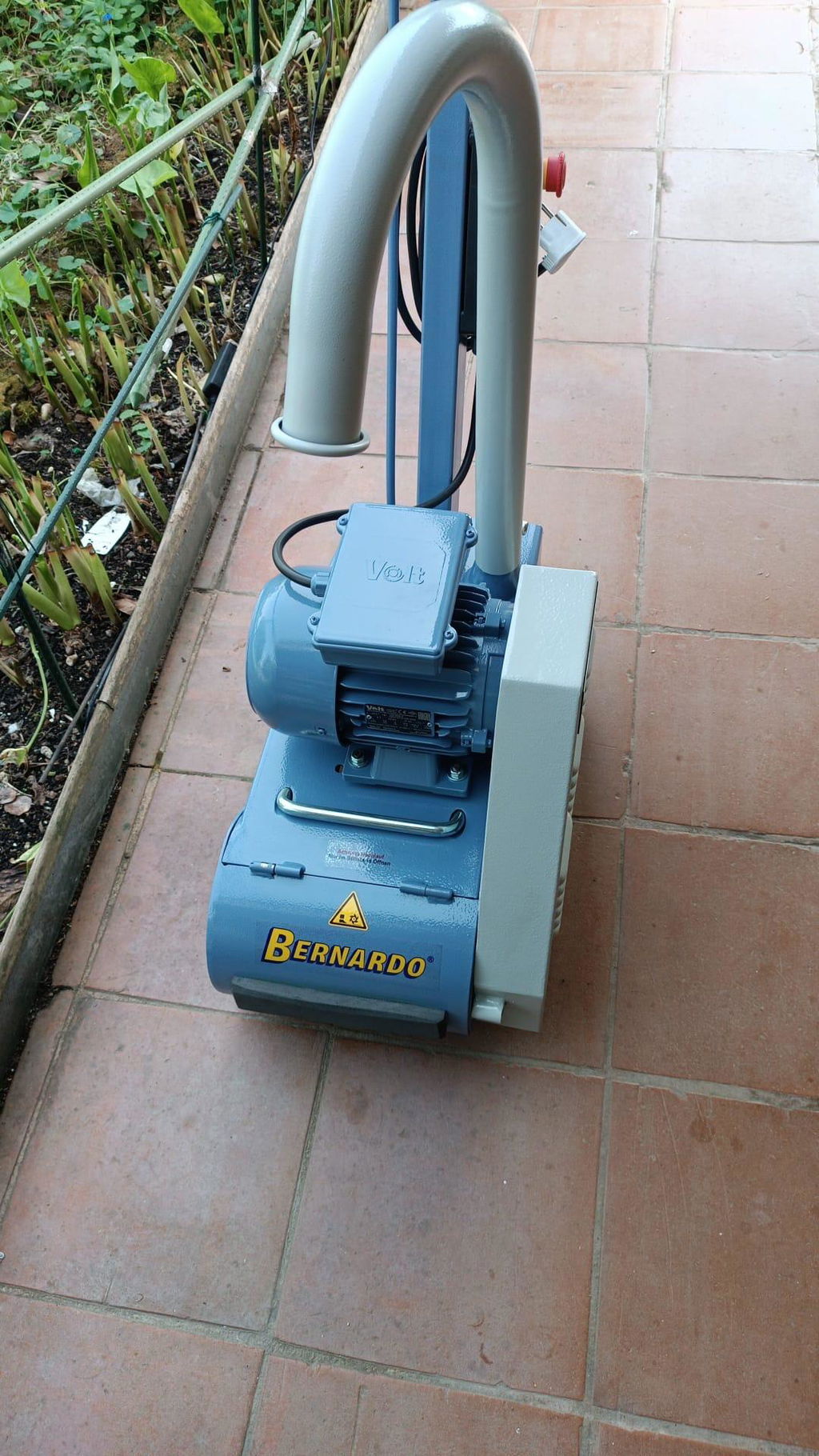
The Bernardo dovetail jaw type B M115 is a professional lathe chuck available from Krollit, an official Bernardo distributor since 2007.
- Compatibility: M115 Chuck
- Intended use: Professional and advanced hobbyist
- External profile: Dovetail
- Internal profile: Knurled
Who uses the Dovetail Jaw type B M115 and for what
Mechanical workshops and artisan turners use the Dovetail Jaw type B M115 as a clamping accessory on metal lathes, ensuring secure clamping and centering of the workpiece during turning, drilling, and grooving operations.
Its place in the Bernardo range
The Bernardo Dovetail Jaw type B M115 is part of the Bernardo lathe chuck range, distributed in Italy by Krollit since 2007. The Bernardo range includes models of various categories and performance levels: to choose the right machine for your use case, you can consult the Bernardo catalog on Krollit or contact customer support for assistance with selection.
Krollit logistics and support
Shipping 3-5 business days from Krollit warehouse for spare parts and accessories. Customer service in Italian available for technical documentation and compatibility verification with the reference machine. Krollit has been an official distributor since 2007.
Who the Dovetail Jaw type B M115 is for
The dovetail jaw type b m115 is recommended for the following professional profiles:
-
Mechanical workshops and artisan turners: secure clamping of round or hexagonal workpieces on metal lathes during turning, drilling, and grooving operations.
-
Users with a Bernardo lathe with a compatible flange: original replacement or upgrade for lathes in the Bernardo range (Profi, Hobby, etc.) with A2 attachment compliant with DIN 55029.
-
Irregular or non-round workpieces: for non-symmetrically centered workpieces, consider 4-jaw independent chucks or universal platforms.
Frequently Asked Questions
When to use this chuck?
It is a self-centering chuck for clamping workpieces on a lathe during turning operations.
Self-centering chucks allow for quick clamping of the workpiece with a single key. The choice depends on the shape of the workpiece (cylindrical, square) and the body material (steel or cast iron).
What material is the chuck body made of?
The material is indicated in the title: steel (PO series) for maximum precision, cast iron (DK/PS series) for standard use.
The choice depends on the intensity of use and the required tolerance: steel for production and precision, cast iron for general use.
Which diameter to choose?
The choice of diameter depends on the lathe spindle nose (it must match the mounting type) and the dimensions of the workpieces to be machined.
Typical diameters: 80-160 mm for hobby lathes, 200-315 mm for professional lathes, 400-630 mm for industrial lathes.
How do I check compatibility with my lathe?
Check the type of mounting on the lathe spindle nose (Camlock D3-D15, or threaded attachment M-) and the corresponding diameter.
On modern lathes, Camlock mounting is the most common. Older lathes may have a threaded (M-) or flanged attachment. The lathe's technical documentation indicates the exact type.
How is chuck precision maintained?
Regular cleaning of the spiral mechanism, periodic lubrication with specific chuck grease, concentricity check every 6 months with a dial indicator.
A jaw that moves with difficulty indicates chips or rust in the mechanism: disassemble, clean, and grease. Concentricity is checked by mounting a ground bar and measuring with a dial indicator: acceptable tolerance 0.03-0.1 mm depending on the model.