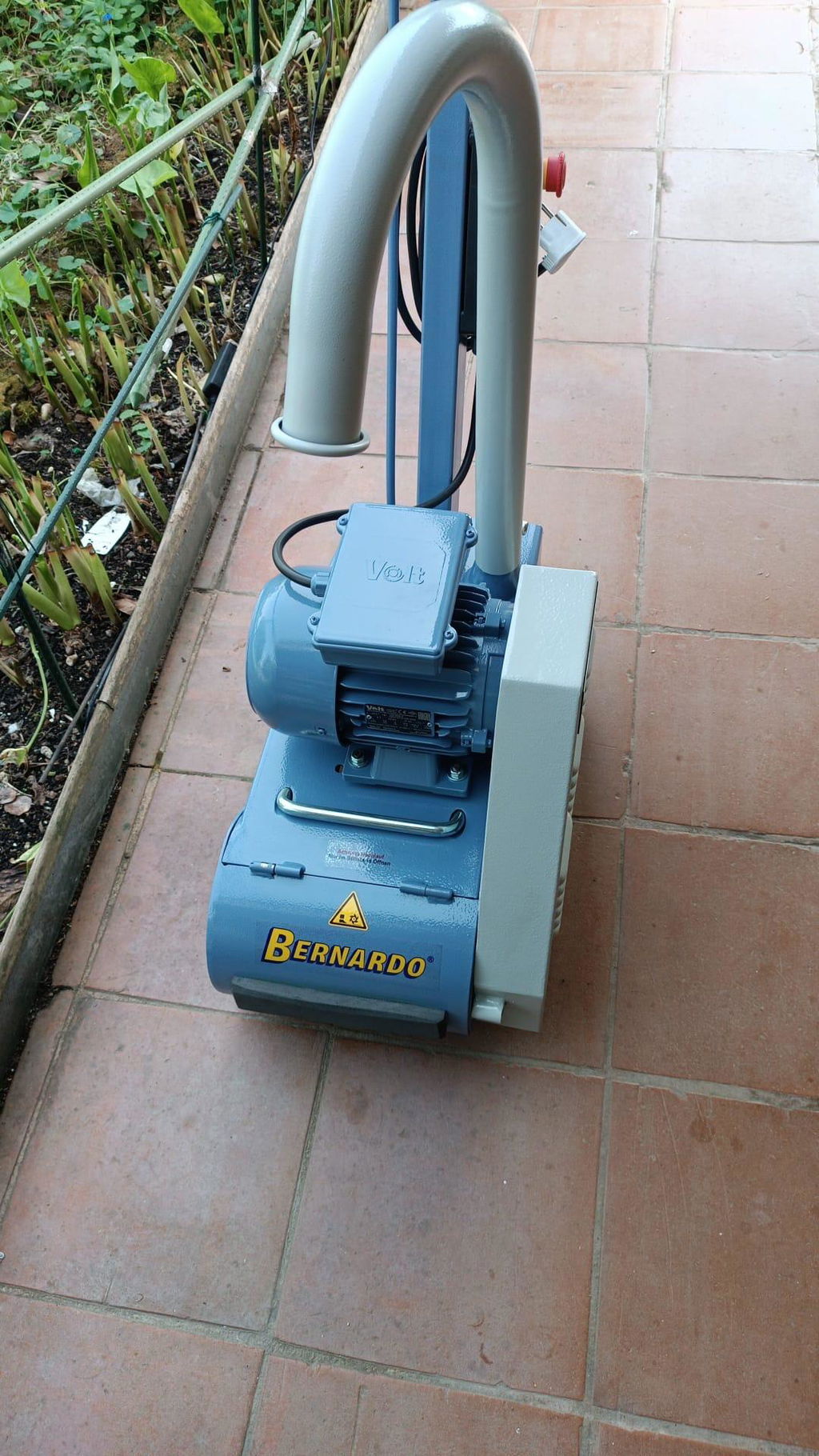
Bernardo Cloth Abrasive Belt 2000 x 50 mm Grit 40 – 10 pieces
The 2000 x 50 mm grit 40 cloth abrasive belt is designed for intensive roughing on metal, wood, and composite materials. Its high-strength cloth structure ensures long life even under heavy loads and continuous use on professional belt sanders.
Grit 40 is particularly suitable for rapid material removal, oxide removal, deburring, and surface preparation before finishing stages. Thanks to its 2000 x 50 mm dimensions, this belt ensures compatibility with numerous industrial and workshop sanders. The 10-piece pack is a cost-effective choice for mechanical workshops, carpentry shops, and professional applications that require operational continuity and consistent performance.
Main Specifications
High-strength cloth abrasive belt
Dimensions 2000 x 50 mm
Grit 40 for rapid roughing
Suitable for metal, wood, and composite materials
High durability even with intensive use
Stable running on professional sanders
Pack of 10 pieces
Technical Specifications
| Specification |
Value |
| Product type |
Cloth abrasive belt |
| Dimensions |
2000 x 50 mm |
| Grit |
40 |
| Backing material |
Reinforced abrasive cloth |
| Usage |
Roughing and material removal |
| Compatibility |
Belt sanders |
| Package quantity |
10 pieces |
Standard equipment
10 cloth abrasive belts 2000 x 50 mm
Grit 40 ready for use
Logistics
Bernardo shipping: 5–9 business days (7 days to the South). Original spare parts available with 3–5 business day shipping. Customer support in Italian available.
Frequently asked questions
Cloth belt vs. paper belt: when to choose cloth?
A cloth belt is more flexible, tear-resistant, and tolerant to curvature — suitable for curved surfaces, edges, pipes, and metalworking. A paper belt is stiffer and suitable for flat wood and plastic surfaces. For metal, cloth is always preferable: it withstands the heat generated by friction better and does not tear with metal chips.
When is grit 80 used and on which materials?
Grit 80 is suitable for sanding metals and hard woods: surface preparation for finishing, blending welded edges. Typical materials: steel, stainless steel, aluminum, hard solid wood. For stainless steel, use specific belts not contaminated with steel — iron residues cause oxidation stains. The electrocorundum (Al₂O₃) abrasive cloth in this series maintains its cutting ability longer than paper abrasive of the same grit.
Can the 2000 x 50 mm roll belt be cut to size?
Yes — cloth belts in rolls can be cut with robust scissors or a utility knife. The length from the roll (50 m) allows for belts of any length. Always cut perpendicular to the belt's direction of travel to prevent edges from detaching during use.
How can belt clogging be avoided on aluminum and plastic?
Aluminum: use belts with a semi-open coat (marked "semi-open coat") and, if possible, apply paraffin wax to the belt to reduce aluminum adhesion. Plastic: reduce speed and work intermittently to avoid overheating the material. A clogged belt does not abrade but only generates heat — it should be cleaned with a wire brush or replaced.
Delivery times?
Original spare parts available with 3–5 business day shipping. Customer support in Italian available.