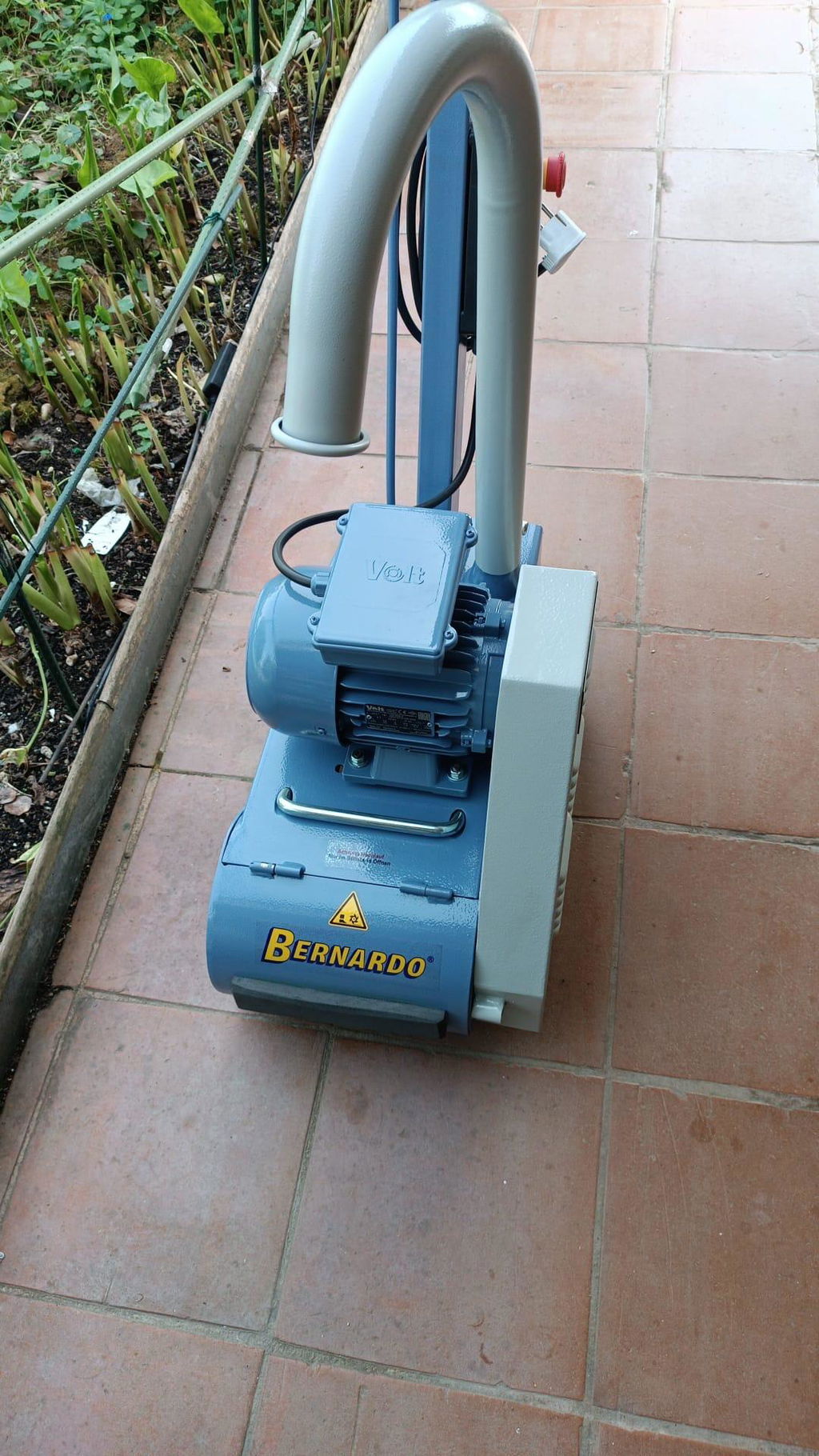
Bernardo Polishing paste Kiesolin 410 green for stainless steel is an abrasive consumable for professional use available on Krollit, official Bernardo distributor since 2007.
- Abrasive base: Aluminum oxide (alumina)
- Abrasiveness level: Medium to high
- Main application: Stainless steel
- Other materials: Metals and plastics
- Abrasive origin: Bauxite (Bayer process)
Who uses Bernardo Polishing paste Kiesolin 410 green for stainless steel and what for
Workshops, carpentry shops and body shops use Bernardo Polishing paste Kiesolin 410 green for stainless steel for sanding, finishing and surface preparation on the materials and grits indicated in the specifications.
Its place in the Bernardo range
Bernardo Polishing paste Kiesolin 410 green for stainless steel is part of the Bernardo abrasive consumables range, distributed in Italy by Krollit since 2007. The Bernardo range includes models of various categories and performances: to choose the right machine for your use case, you can consult the Bernardo catalog on Krollit or contact customer support for selection assistance.
Krollit logistics and support
Shipping 3-5 business days from Krollit warehouse for spare parts and accessories. Customer support in Italian available for technical documentation and compatibility verification with the reference machine. Krollit has been an official distributor since 2007.
Who is Bernardo Polishing paste Kiesolin 410 green for stainless steel for?
Bernardo Polishing paste Kiesolin 410 green for stainless steel is recommended for the following professional profiles:
-
Workshops, carpentry shops and body shops: sanding, finishing and surface preparation in the indicated grits.
-
Users with compatible machine (diameter/attachment): original spare part for the machines indicated in the description.
-
Materials outside product specification: check the grit and supported material to avoid damaging the piece.
Technical specifications
| Abrasive base |
Aluminum oxide (alumina) |
| Abrasiveness level |
Medium to high |
| Main application |
Stainless steel |
| Other materials |
Metals and plastics |
| Abrasive origin |
Bauxite (Bayer process) |
Frequently asked questions
Which grit should I choose for my work?
K36-K60 for roughing and paint/glue removal; K80-K120 for intermediate sanding; K150-K240 for pre-painting finishing.
Grit K36 is too aggressive for sharpening tools (it ruins the edge). For HSS sharpening use K60-K80. For sanding on soft wood start with K80, on hard wood K100. Progressively increase: each grit approximately doubles the fineness.
Normal corundum or zirconium corundum?
Normal corundum for wood (red); zirconium corundum (blue) for metal or intensive use, it is self-sharpening.
Normal corundum is the universal choice for wood and finishes. Zirconium is more aggressive, recommended for iron and light alloys, and maintains its edge due to its self-sharpening action (fragments exposing new grains).
Which machine/size is it compatible with?
Check the title for belt dimensions (e.g., 75×533 mm, 100×610 mm) or disc dimensions (Ø 115, 125, 150 mm).
Abrasive belts should be chosen based on the circumference of the sander's roller. Common sizes: 40×303 mm (handheld), 75×533 mm (benchtop), 100×610 mm (semi-industrial). Also check the direction of travel (arrows on the back).
How many pieces are in the package?
See "Packaging" or "Quantity" in the product's technical sheet.
Krollit supplies standard manufacturer packaging (typically 5, 10 or 25 pieces). For intensive professional use, it is advisable to keep a stock of at least 2-3 packages of different grits.
How should abrasive consumables be stored?
In a dry place, away from heat sources and humidity, keeping the original packaging closed.
Humidity degrades the binder of the abrasive paper and drastically reduces its lifespan. For belts not in use, hanging them vertically prevents permanent creases that cause slipping during operation.